



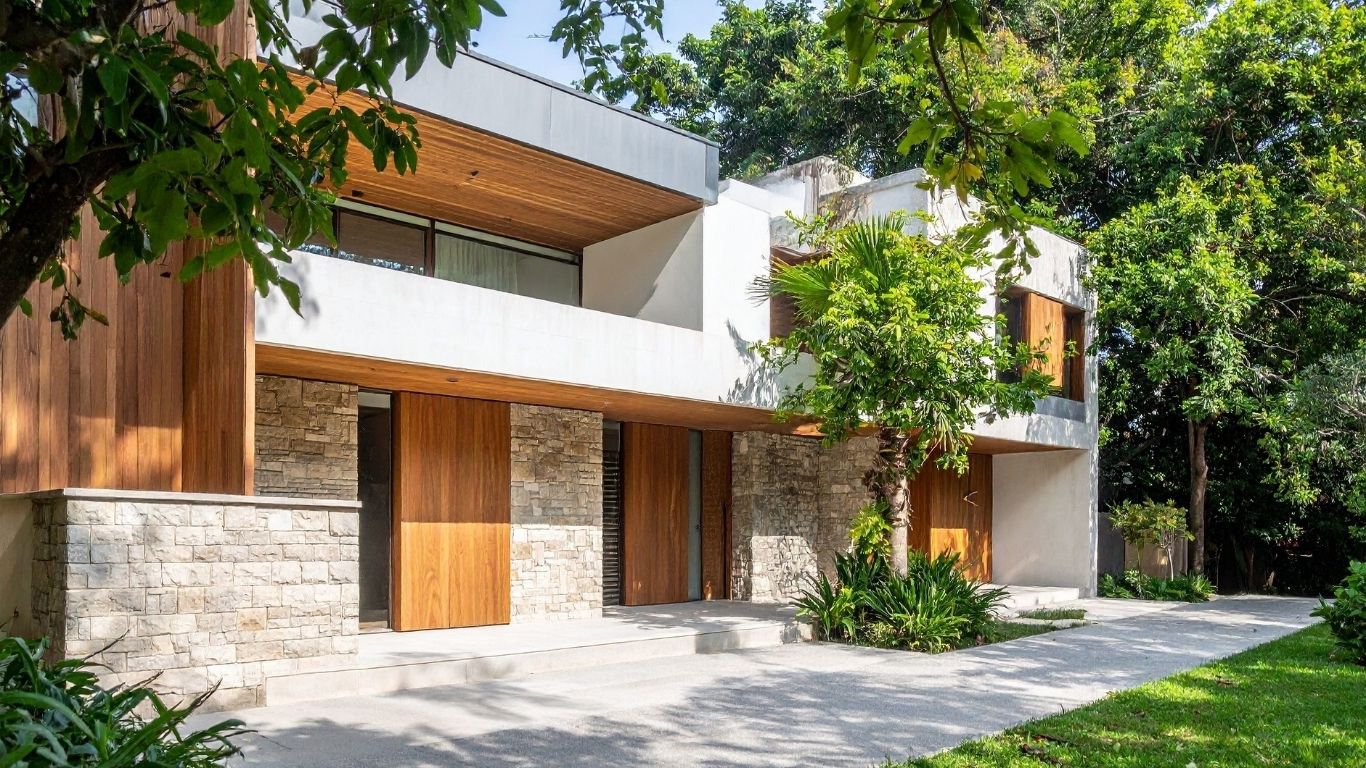
Some homes need more visual depth, not a full exterior makeover. Manufactured stone veneer can add texture around an entry, porch, garage, or lower wall while allowing the existing siding and trim to remain in place. The result can give the facade a more finished look without changing every surface.
Placement and proportion determine whether the stone looks original to the home or added as an afterthought. Color, profile, mortar, drainage details, and nearby materials all influence the final appearance. Looking at the exterior as one design helps homeowners create contrast without making the front elevation feel crowded.
Begin With the View That Needs More Definition
Stand across the street and notice where the exterior loses balance or lacks a clear focal point. Pay attention to the height of the walls, the width of the garage, and how the entry relates to the rest of the facade. That wider view helps homeowners decide how much contrast the design needs before choosing a stone profile or color.
A Flat Front Elevation Can Gain Depth Without a Full Redesign
Stone changes how the eye reads the front of a home by creating shadow lines and a stronger visual base. A narrow band can break up a tall wall, while a deeper accent may balance a wide garage or porch. Manufactured stone veneer can strengthen curb appeal by correcting those proportions without competing with the roof, windows, or siding.
The transition into nearby materials deserves as much attention as the stone itself. Ending the accent at a natural corner, column, sill, or change in the wall plane helps it read as part of the architecture. A clear stopping point keeps the update from looking like a decorative strip applied after the fact.
Manufactured Stone Veneer Delivers the Look of Masonry With Less Weight
Manufactured stone veneer captures the texture, color variation, and character of natural stone without the weight of full-depth masonry. Its lighter construction gives homeowners more flexibility on exterior walls, entries, columns, and other architectural details.
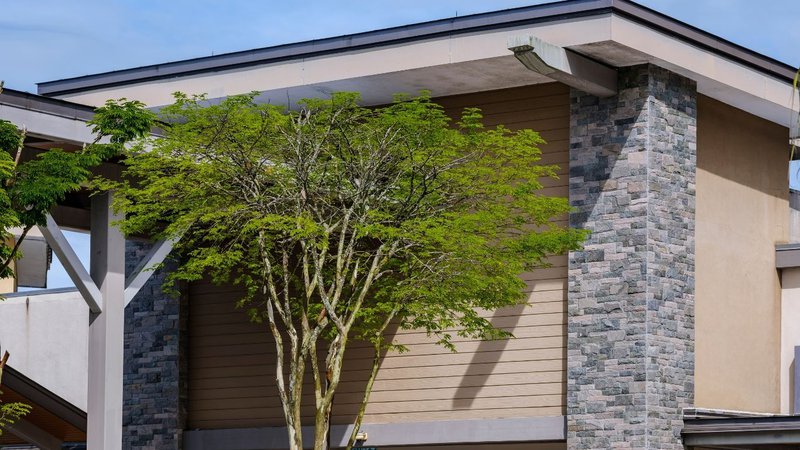
Available profiles, colors, grout tones, and accessory pieces can connect the finish with the home’s existing design. Minnesota Exteriors carries ProVia stone options that homeowners can compare before selecting stone shapes, mortar styles, sills, and finishing details.
Where Manufactured Stone Veneer Creates the Strongest Focal Point
Front entries often benefit from added texture because they already serve as the visual center of the home. Manufactured stone veneer can frame the doorway, cover porch walls, or wrap columns without competing with the surrounding siding.
A stone wainscot can ground a wide front elevation or create a stronger base beneath windows. Extending the accent toward the garage may also help connect separate parts of the facade when the placement follows the home’s proportions.
Smaller details can make the design feel complete without adding another large stone surface. Coordinated sills, trim stones, corners, or a keystone above the entrance can carry the same texture into key architectural areas.
Moisture Protection Sits Behind Every Good-Looking Stone Accent
The visible stone receives most of the attention, but the layers behind it play a major role in long-term performance. Water-resistive barriers, flashing, drainage paths, and properly treated openings help move moisture away from the wall assembly. Manufactured stone veneer needs these details around windows, doors, roof intersections, and other transitions where water may collect.
Clearances near roofing, paving, soil, and decks also help protect the finished installation. Poor drainage or missing flashing can allow moisture to reach hidden materials even when the stone surface still looks sound. Correct flashing, drainage, and clearance details protect the wall assembly behind the veneer, while proper stone veneer installation helps reduce the risk of moisture-related repairs.
Color, Profile, and Mortar Decide Whether the Stone Belongs
Stone can look very different outdoors than it does in a small sample or online image. Sunlight, shade, roof color, siding, trim, and landscaping all influence how its tones appear on the home. A manufactured stone veneer selection should connect with those existing elements instead of introducing a separate visual theme.
Let the Home’s Fixed Colors Lead
Use the exterior features that will remain, including the roof, windows, brick, trim, and siding colors and textures, as the starting palette. Stone that repeats or bridges those colors will usually look more connected to the architecture.
Treat Mortar and Accessories as Part of the Design
Mortar color and joint width can make the same stone profile feel rustic, refined, subtle, or bold. Review sills, corners, trim pieces, and keystones alongside the stone so every finishing detail supports the same design direction.
Simple Care Protects the Look of Manufactured Stone Veneer
Manufactured stone veneer does not need paint or stain, but it still benefits from occasional cleaning and inspection. Homeowners should check for dirt buildup, irrigation spray, damaged mortar, and changes around flashing or nearby transitions. A quick review after severe weather can also reveal loose material, drainage problems, or landscaping that keeps the surface damp.
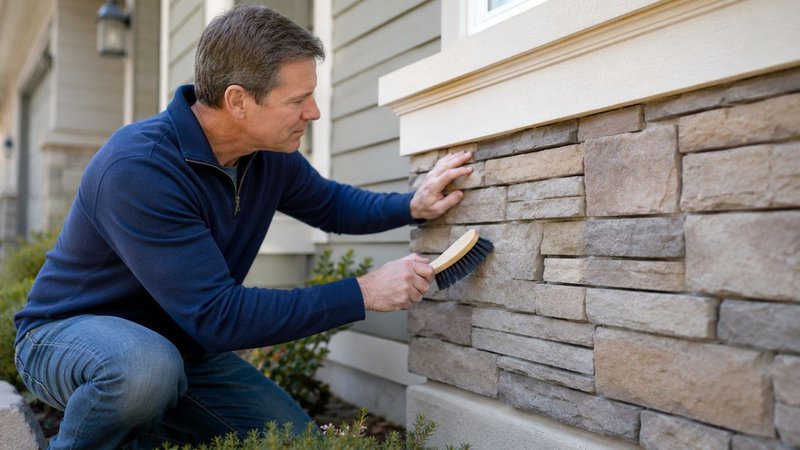
Use mild soap, water, and a soft-bristle brush to remove surface dirt, then rinse the area with fresh water. Keep sprinklers directed away from the wall and trim back plants that hold moisture against the stone. Avoid pressure washers, wire brushes, acids, and abrasive cleaners because they may damage the surface or mortar joints.
Compare Manufactured Stone Veneer Beyond the Sample Board
Small samples and online photos cannot fully show texture, color variation, or mortar contrast. A larger display reveals how a profile looks beside siding, roofing, trim, and entry features. It also shows whether the accent has enough visual weight for a wider wall or architectural detail.
Full-size samples at the Minnesota Exteriors showroom make it easier to compare stone profiles, grout colors, mortar-joint sizes, and finishing accessories together. Tour the display and shape a stone combination that feels natural to your home’s architecture.